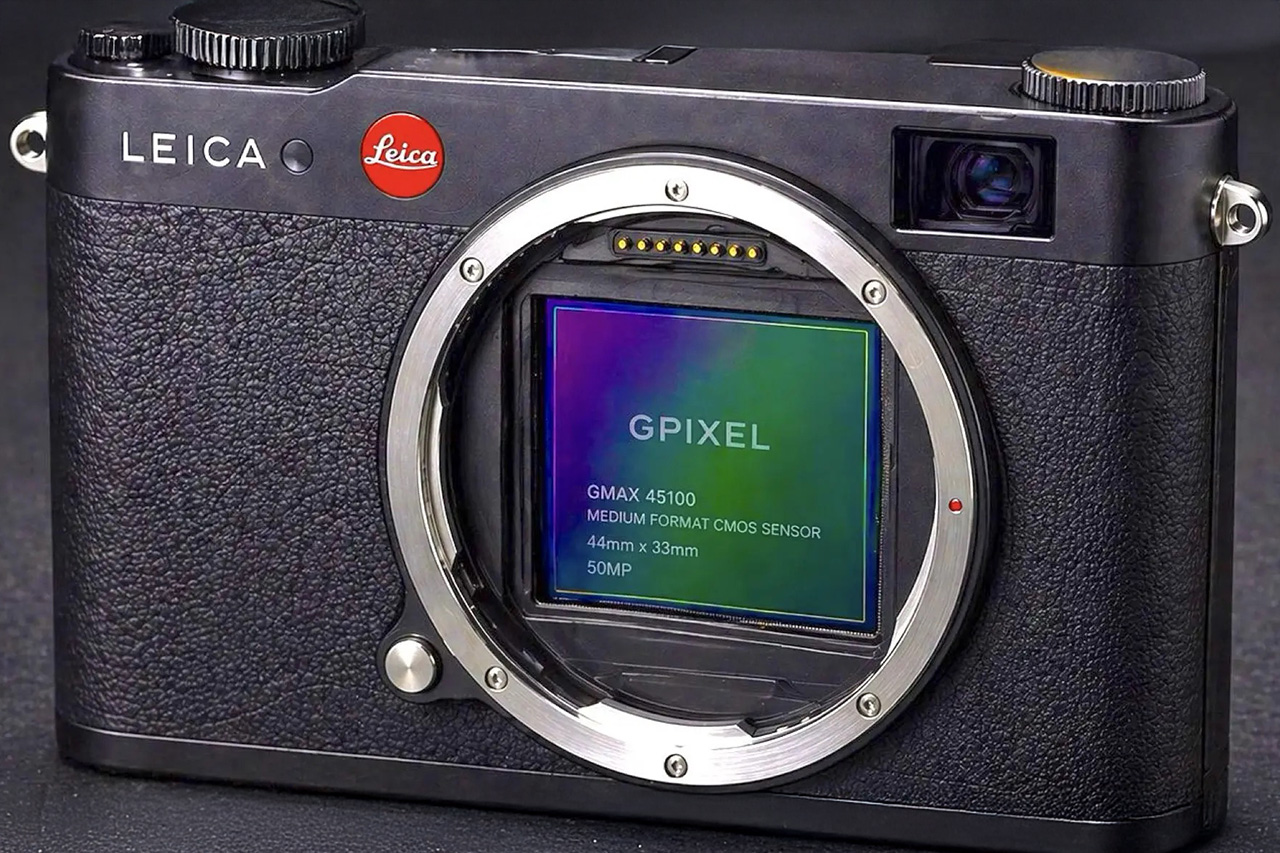
Leica Rumored to Be Developing Medium‑Format Mirrorless Camera with Custom Gpixel Sensor
Leica has officially announced a sensor‑development partnership with Gpixel, describing the effort as a collaboration to create a next‑generation image sensor “tailored specifically for its future cameras.” While Leica has not confirmed any specific product, industry analysts believe this move could signal the development of a new medium‑format mirrorless system, potentially replacing or expanding beyond the company’s DSLR‑based S system.
The key phrase from Leica Chairman Dr. Andreas Kaufmann - “a true Leica sensor” - suggests a strategic shift toward deeper control over sensor architecture, color science, and image‑processing characteristics. This would mark a departure from Leica’s historical reliance on off‑the‑shelf sensors and could enable performance tuned specifically to the Leica “look.”
The “true Leica sensor” partnership
Leica describes the Gpixel collaboration as a co‑engineering effort, covering engineering, validation, image tuning, and production readiness. This level of involvement is unusual for Leica, which has traditionally differentiated its cameras through optics, color science, and industrial design rather than sensor development.
Gpixel, a China‑based sensor manufacturer, is known for high‑performance imaging in scientific, industrial, and cinematic applications. Its expertise in dynamic range, readout speed, and noise optimization makes it a plausible partner for Leica’s ambition to create a sensor with distinctive rendering characteristics.
Dr. Kaufmann’s statement reinforces this direction:
“I am really happy and proud that our long‑term cooperation with Gpixel will soon result in a true Leica sensor.”
Why medium‑format mirrorless makes sense
Leica’s current medium‑format platform, the S system, is DSLR‑based and has evolved slowly compared to mirrorless competitors like Hasselblad’s X series and Fujifilm’s GFX line. A mirrorless redesign would allow Leica to:
- Reduce mechanical complexity and overall size
- Improve live‑view and electronic‑shutter performance
- Increase readout speed and responsiveness
- Align with the broader industry shift toward mirrorless systems
A custom sensor could also address medium‑format’s traditional weaknesses, such as slow readout and limited video capabilities - areas where smaller formats have advanced more rapidly.
Strategic context and market positioning
The S system occupies a high‑end niche, valued for its color accuracy and build quality. However, its DSLR architecture and conservative update cycle have limited its appeal among hybrid shooters and younger creators.
A new medium‑format mirrorless platform would allow Leica to:
- Reassert technological leadership in the premium segment
- Differentiate itself from competitors using Sony‑supplied sensors
- Appeal to a broader audience without abandoning existing S‑system users
- Establish long‑term control over its sensor roadmap
The Gpixel partnership strongly suggests Leica is seeking greater independence in sensor design - a move with long‑term strategic implications.
Potential specifications (pure speculation)
If Leica does pursue a medium‑format mirrorless system with a Gpixel‑designed sensor, analysts suggest it could feature:
- Sensor size: 44×33mm to 54×40mm
- Resolution: 60–100MP
- Readout: Faster architecture to reduce rolling shutter
- Color science: Deep integration with Leica’s tonal and color‑rendering philosophy
- Lens mount: New mirrorless mount with possible S‑mount adapter
- Video: 4K/60p or 8K/30p with Leica‑style color profiles
These remain speculative and are not based on leaks.
Expected timeline and market impact
Given the early stage of the Leica–Gpixel partnership, a camera announcement is unlikely before late 2026 or early 2027. Leica would need time to finalize the sensor, design a new body, develop a lens roadmap, and build supporting software.
If realized, a Leica medium‑format mirrorless system would intensify competition with Hasselblad X and Fujifilm GFX, offering a premium alternative with Leica’s optical and color‑science pedigree. Pricing would almost certainly remain in the ultra‑premium tier, likely exceeding $10,000 for the body alone.