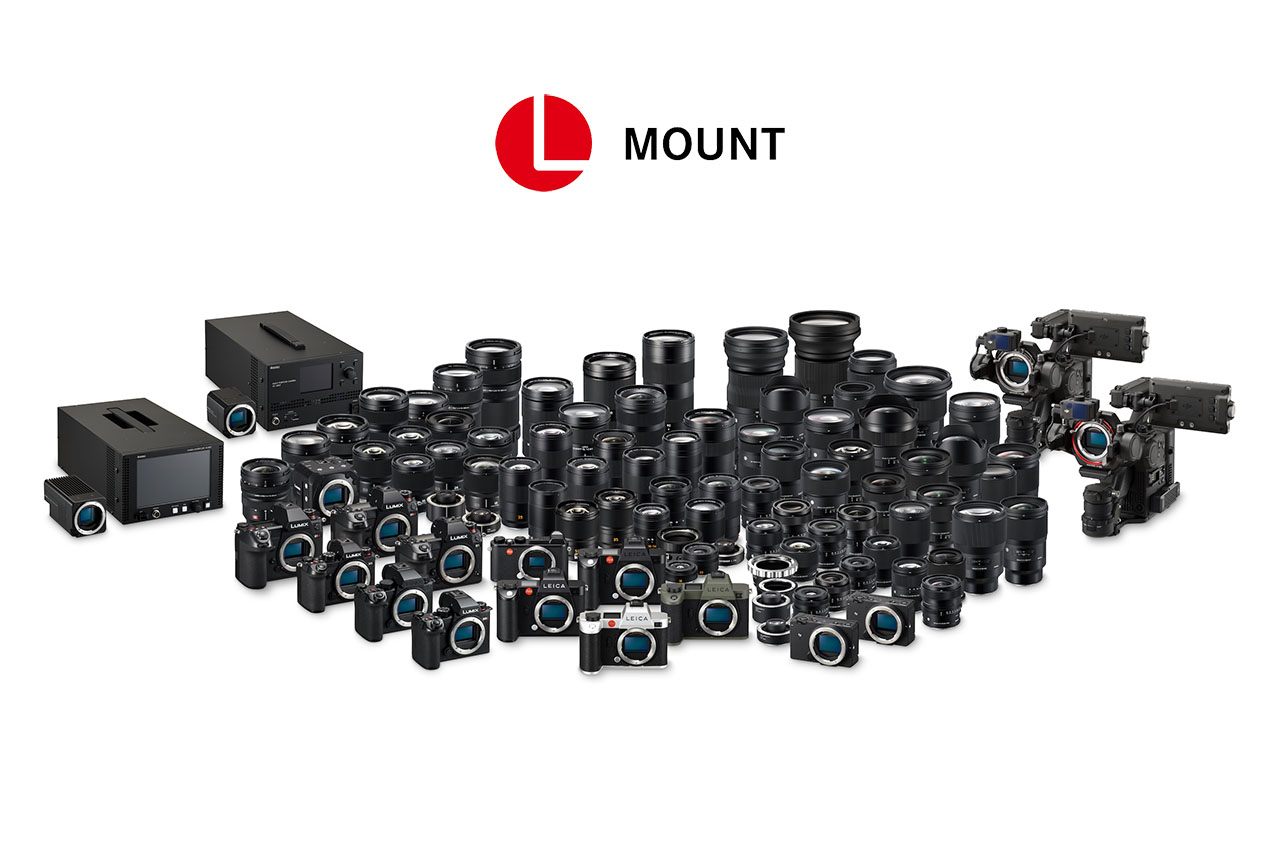
The L-Mount Alliance turned five in 2024, and the system has come a long way since its launch. Panasonic, Leica, and Sigma have collectively built out a lens lineup that rivals the more established Sony E-mount and Canon RF systems in sheer volume. But volume is not the same as momentum, and in 2026, the L-Mount system finds itself at a crossroads.
Each of the three alliance members is pulling in a slightly different direction. Panasonic is leaning into hybrid video features and compact bodies. Leica continues to serve its niche of premium rangefinder-style cameras with prices that exclude most photographers. Sigma has become the primary lens supplier for the system, releasing autofocus primes and zooms at a pace that outstrips both partners combined.
The question is whether this three-headed approach can sustain the mount long-term, or whether L-Mount will settle into permanent third-place status behind Sony and Canon.
Where the system stands today
The L-Mount lens catalog is genuinely impressive. Sigma alone has released over 20 full-frame autofocus lenses for the mount, covering everything from 14mm ultra-wides to 500mm telephotos. Panasonic has contributed a smaller but high-quality lineup of S Pro lenses. Leica offers its SL and TL lenses, though the SL series is priced at a level that makes it irrelevant for most buyers.
On the camera body side, Panasonic has the most diverse lineup. The S5II and S5IIX remain excellent values for hybrid shooters, offering full-frame sensors, 6K video, and phase-detect autofocus at prices well below comparable Sony and Canon bodies. The newer S9 is a compact body aimed at content creators, and the GH7 (though Micro Four Thirds) shows Panasonic has not abandoned its original mount entirely.
Leica’s SL3 is a beautiful camera with a 60MP sensor and build quality that justifies its price for those who can afford it. But the SL3 starts at nearly $7,000 body only, which places it in a different market entirely from the Panasonic bodies.
Sigma has the BF, the smallest full-frame cameras ever made. They are fascinating products with genuine appeal for specialized applications, but their quirky design and limited battery life have kept them from mainstream success.
The strengths: video and value
L-Mount’s clearest advantage is video. Panasonic’s S5II and S5IIX offer features that cost significantly more on other systems. Open Gate recording, waveforms, vectorscopes, and unlimited recording times are standard on Panasonic bodies, while Canon and Sony often reserve those features for higher-end models or charge extra for firmware unlocks.
For photographers who also shoot video, the value proposition is compelling. A Panasonic S5II with a Sigma 24-70mm F2.8 costs less than a Sony A7 IV with the equivalent Sony lens, and the Panasonic records better video specs out of the box.
Sigma’s lens lineup is the other major strength. The company has leveraged its position as both a lens manufacturer and an alliance member to release L-Mount versions of nearly every lens in its catalog, often at prices that undercut first-party options. The Sigma 24-70mm F2.8 DG DN, 35mm F1.4 DG DN, and 85mm F1.4 DG DN are all optically excellent and significantly cheaper than Leica or Panasonic equivalents.
The weaknesses: autofocus and momentum
L-Mount’s biggest technical weakness is autofocus. Panasonic’s phase-detect system, introduced with the S5II, was a major improvement over the contrast-detect systems that plagued earlier bodies. But it still lags behind Sony’s Real-Time Tracking and Canon’s Dual Pixel CMOS AF II in consistency, particularly for eye detection in challenging light and for tracking fast-moving subjects.
For portrait and landscape photographers, the difference is minor. For sports and wildlife shooters, it is a dealbreaker. Sony and Canon have spent years refining their AF algorithms, and the gap is noticeable in real-world use.
The other weakness is momentum. Sony announces new bodies and lenses at a pace that keeps the system in the headlines constantly. Canon’s RF mount has seen explosive growth since its launch, with professional-grade lenses and bodies arriving regularly. L-Mount feels quieter by comparison. Panasonic’s last major full-frame announcement was the S9, a content creator body that did not excite the core photography market.
The three partners: aligned or diverging?
The L-Mount Alliance was founded on the idea that three companies could share a mount and collectively build a system larger than any of them could manage alone. In practice, the alliance has functioned more like three independent companies that happen to use the same lens mount.
Panasonic is focused on video and hybrid features. Leica is focused on luxury. Sigma is focused on lenses. There is nothing wrong with any of these strategies individually, but they do not add up to a unified ecosystem with a clear identity.
Sony’s E-mount has a clear identity: the most mature mirrorless system with the broadest lens selection and the best autofocus. Canon’s RF mount has a clear identity: professional-grade optics and bodies with industry-leading video autofocus. L-Mount’s identity is harder to pin down. Is it the video-first system? The value system? The premium system? It is all three, depending on which product you are looking at, and that lack of focus makes it harder to market.
What the system needs next
L-Mount needs a flagship. Not another competent mid-range body, but a camera that makes photographers stop and reconsider their system choice. The Panasonic S1H was close when it launched, but it is now several generations old. The S5II is excellent value, but it is not a flagship. The Leica SL3 is a flagship in price and build, but its autofocus and video features do not match its cost.
A true L-Mount flagship would need to combine Panasonic’s video expertise with Sony-level autofocus, Sigma’s lens ecosystem, and a price that undercuts the competition. That is a tall order, but it is what the system needs to break out of third place.
The lens lineup also needs gaps filled. There is still no native L-Mount tilt-shift lens. The telephoto selection, while improved, lacks the extreme long primes that sports and wildlife photographers need. Panasonic’s S Pro lenses are excellent but expensive, and Sigma’s alternatives, while cheaper, do not always match the build quality of first-party options.
The bottom line
L-Mount is not in trouble. The system has enough users, enough lenses, and enough unique strengths to remain viable for years. Panasonic’s video features alone ensure a dedicated user base. Sigma’s lens catalog makes it an attractive option for photographers building a kit on a budget.
But viable is not the same as thriving. Without a clearer direction and a genuine flagship product, L-Mount risks becoming the system photographers consider but ultimately pass over in favor of Sony’s maturity or Canon’s momentum. The alliance has the pieces. It just needs to put them together into something that feels like a unified vision.