Sigma Patent P2026079898: The Ultimate Portrait Prime Trio for Mirrorless
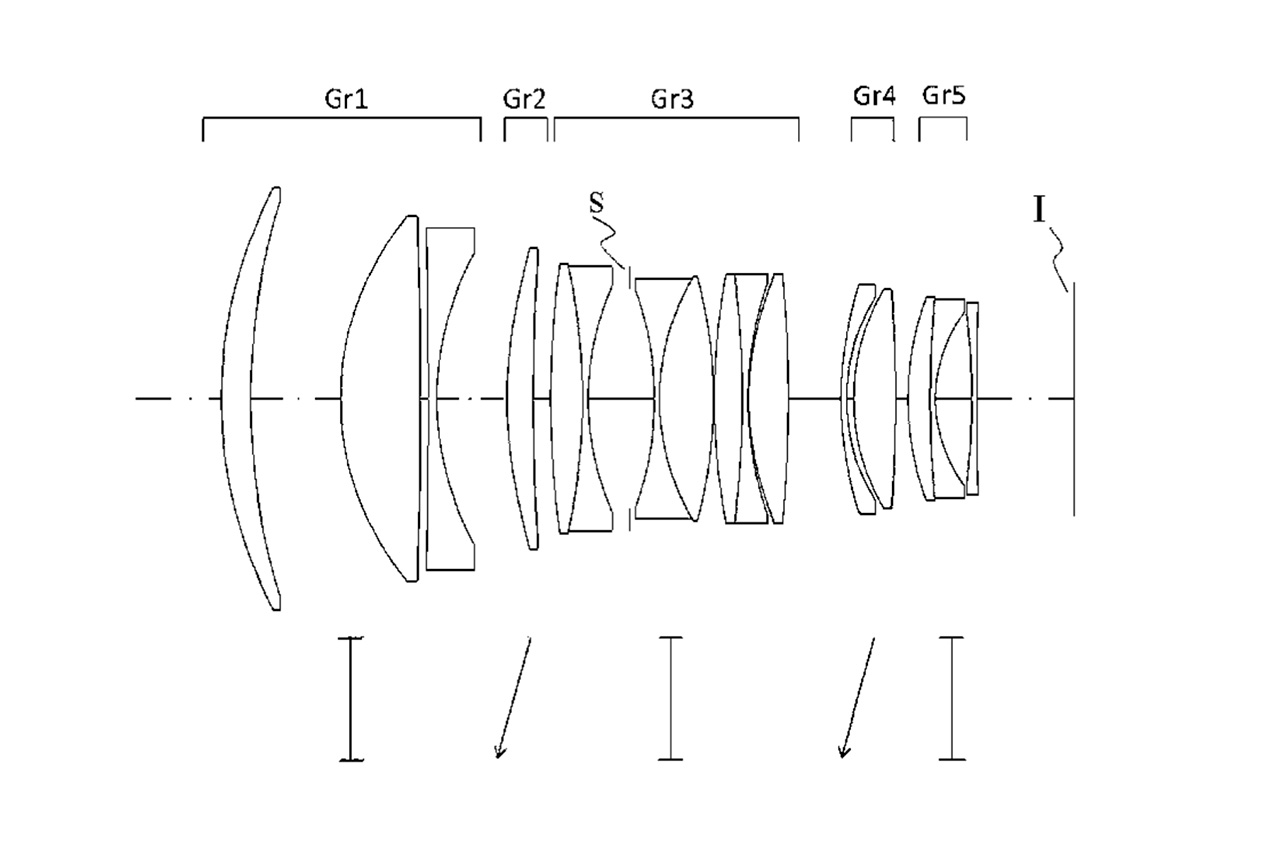
Sigma has published a new optical patent in Japan that lays out what could become the most aggressive portrait prime lineup in the mirrorless market. Japan Patent P2026079898, describes three fast telephoto designs engineered from the ground up for short-flange mirrorless mounts: an 85mm F1.2, a 105mm F1.4, and a 135mm F1.4.
Unlike many patent filings that explore one-off ideas, the consistency across all three designs, same back focal length range, same image height targets, same format compatibility, suggests a coordinated engineering program rather than scattered experiments. These are not DSLR optical formulas with a spacer bolted on. They are native mirrorless designs.
The Basics of the Patent
| Patent Details | Information |
|---|---|
| Patent number | P2026079898 |
| Patent holder | Sigma Corporation |
| Source | Japan Patent Office (J-PlatPat) |
| Designs disclosed | 85mm F1.2, 105mm F1.4, 135mm F1.4 |
| Format | Full Frame (APS-C compatible) |
| Back focal length | Approximately 13mm to 17mm |
| Image height | Approximately 14.2mm to 21.6mm |
The back focal length range is the key engineering tell. Across all three designs, the rear element sits 13mm to 17mm from the sensor plane, a distance range that only makes sense for the shallow flange depths of modern mirrorless mounts like Sony E (18mm) and L-Mount (20mm). If Sigma were repurposing DSLR designs, the back focal length would be significantly longer to accommodate the mirror box that no longer exists.
Three designs, three engineering challenges
Design 1: 85mm F1.2
This is the most commercially significant focal length in the patent. An 85mm at F1.2 sits at the intersection of what portrait photographers want and what optical engineers struggle to deliver. The shallow depth of field at this aperture and focal length, roughly 4cm at a 3-meter shooting distance, demands extraordinary control over spherical aberration and field curvature.
Sigma’s existing 85mm F1.4 DG DN Art is already a strong performer at a fraction of the price of first-party options. Moving to F1.2 requires larger elements, tighter tolerances, and autofocus motors capable of moving substantially heavier glass groups. The patent suggests Sigma believes the engineering is solvable, and the payoff is clear: Sony does not currently offer an 85mm F1.2, which would give Sigma a unique position in the E-mount ecosystem.
Design 2: 105mm F1.4
The 105mm F1.4 is Sigma’s heritage play. The DSLR-era 105mm F1.4 DG HSM Art earned the nickname “Bokeh Master” and built a cult following among portrait photographers who found 85mm too wide and 135mm too compressed. The challenge of that lens was always physical: at 1.6kg with a 105mm front filter thread, it demanded a tripod collar and serious commitment.
The mirrorless redesign in this patent represents an opportunity to rebuild the lens around a shorter optical path. A native mirrorless design allows the rear elements to sit closer to the sensor, which can reduce the overall length and weight without compromising the optical formula that made the original famous. If Sigma can bring the weight below 1.2kg while keeping the optical character intact, this becomes the definitive portrait lens for anyone who wants the 105mm look in a package they can actually handhold through a full wedding day.
Design 3: 135mm F1.4
This is the exotic. No manufacturer currently ships an autofocus 135mm F1.4 for mirrorless. Sony, Canon, and Nikon all stop at F1.8. Sigma themselves offer the 135mm F1.8 DG DN Art, which is already an outstanding lens. Moving to F1.4 at this focal length adds roughly 66% more light gathering and a visibly shallower depth of field.
The engineering demands are significant. A 135mm F1.4 requires a front element diameter approaching 96mm, which pushes against the limits of standard 95mm filter threads. The optical formula needs to manage longitudinal chromatic aberration across a much wider aperture than the F1.8 designs the industry has standardized around. If Sigma ships this lens, it would be a statement of engineering ambition as much as a commercial product.
Engineering implications
Across all three designs, several consistent themes emerge:
- Unified back focal length. The 13mm to 17mm range across all three suggests a shared mechanical platform, which would reduce development cost and speed time to market.
- Full-frame coverage with APS-C compatibility. Sigma is not designing these as niche full-frame-only optics. The image height specification confirms full sensor coverage on both formats.
- Short-flange optimization. The rear element placement takes direct advantage of the mirrorless mount geometry, which typically yields better corner sharpness and smaller overall lens dimensions compared to DSLR-adapted designs.
The shared engineering approach is worth noting because it is how Sigma has historically operated. The DG DN Art line was built as a coordinated series, not a collection of one-offs, and these three designs follow the same pattern.
What this patent represents
These patent filings should be viewed as engineering studies, not product announcements. Companies file optical formulas for research, to block competitors, and to preserve design approaches that may never reach production. Sigma files more patents than it ships lenses, and that is standard industry practice.
That said, the completeness and internal consistency of these three designs sets them apart from typical defensive filings. Sigma has been methodically rebuilding its Art line for mirrorless, moving from standard zooms to fast primes. The exotic portrait telephotos are the logical next targets, the lenses that built the Art brand’s reputation during the DSLR era. If even two of these three designs reach production, the high-end portrait lens market for E-mount and L-Mount gets significantly more interesting.