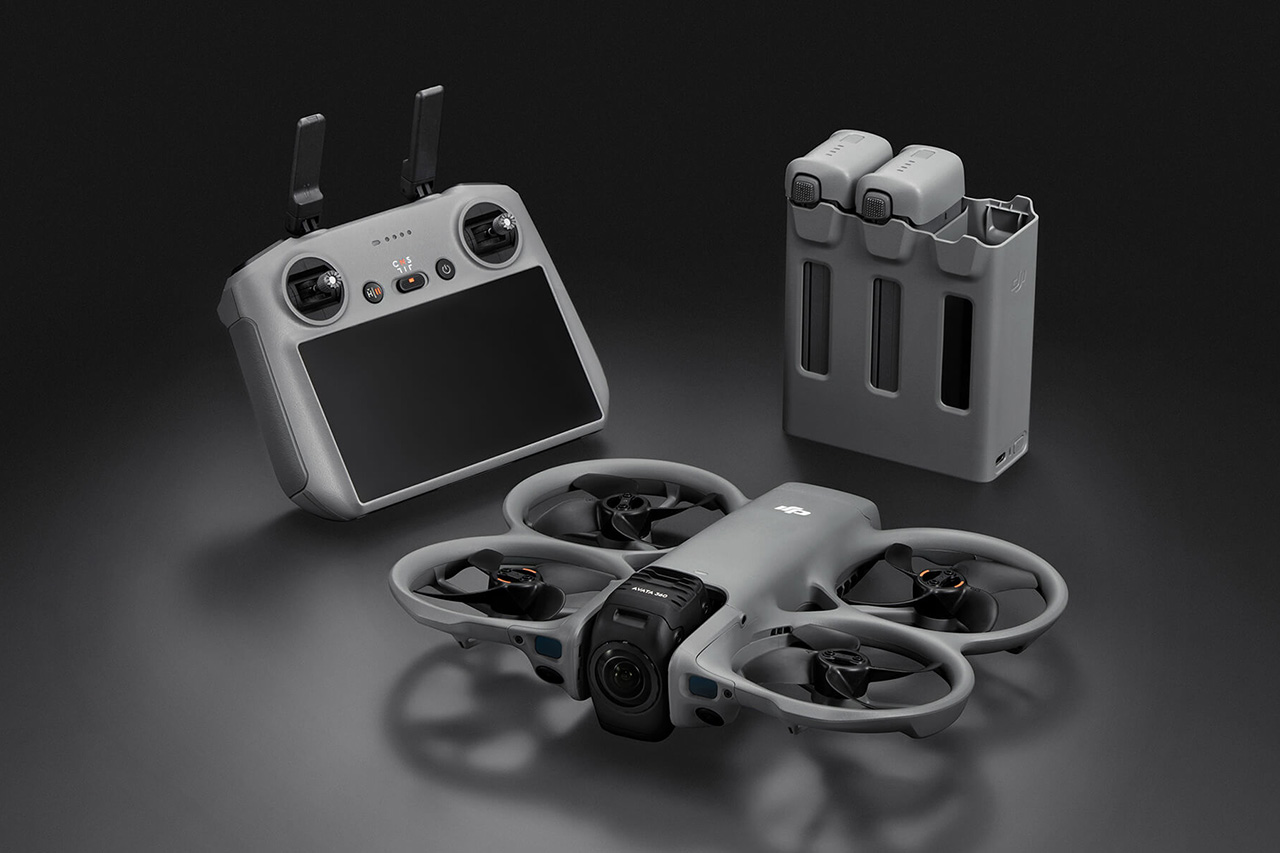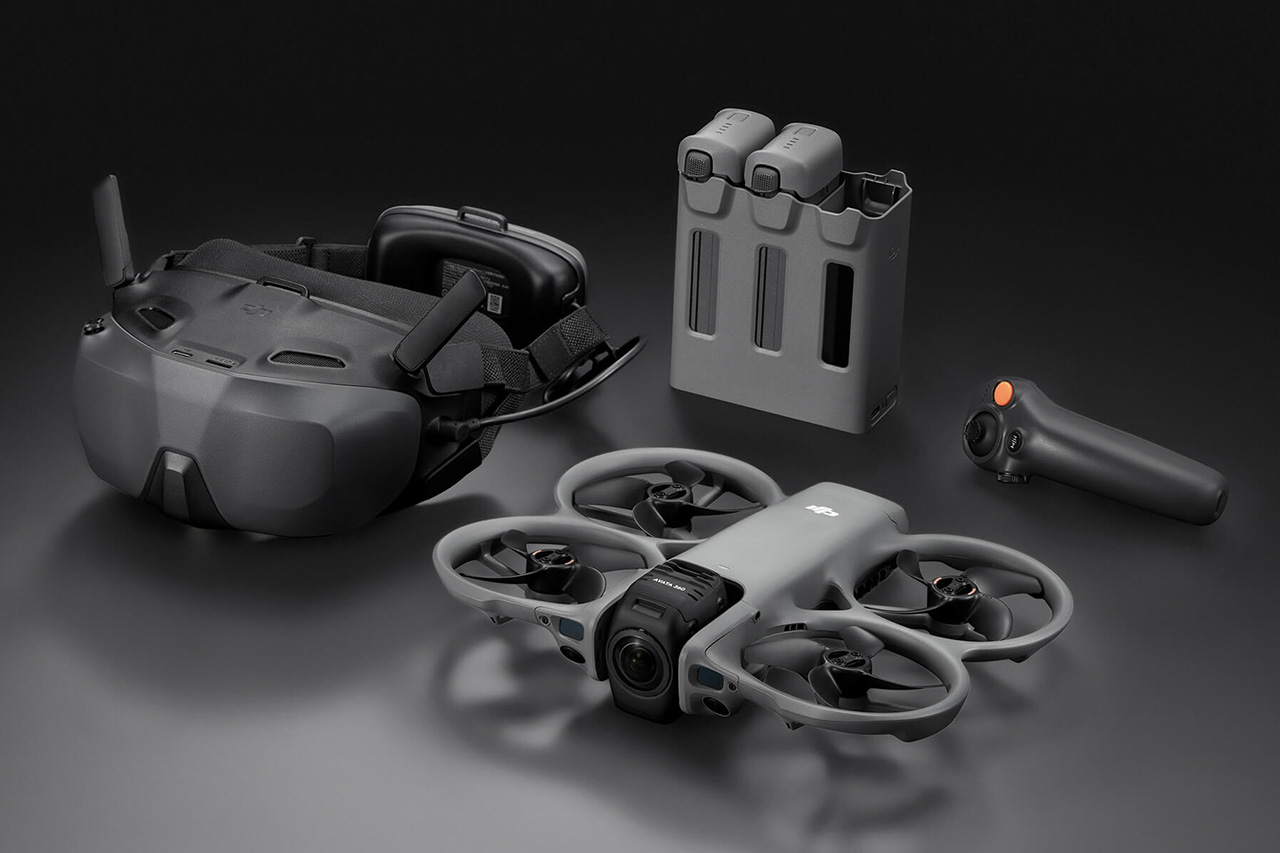
DJI has officially launched the Avata 360, introducing a new FPV drone platform built around native 360‑degree capture and post‑production reframing. Announced on March 18, 2026, the Avata 360 combines DJI’s FPV flight system with an integrated spherical imaging workflow, allowing creators to capture full environments in a single flight while minimizing the need for precise in‑air framing.
Rather than serving as a direct successor to the Avata 2, the Avata 360 represents a parallel branch in DJI’s FPV lineup, targeting immersive video creation and flexible storytelling.
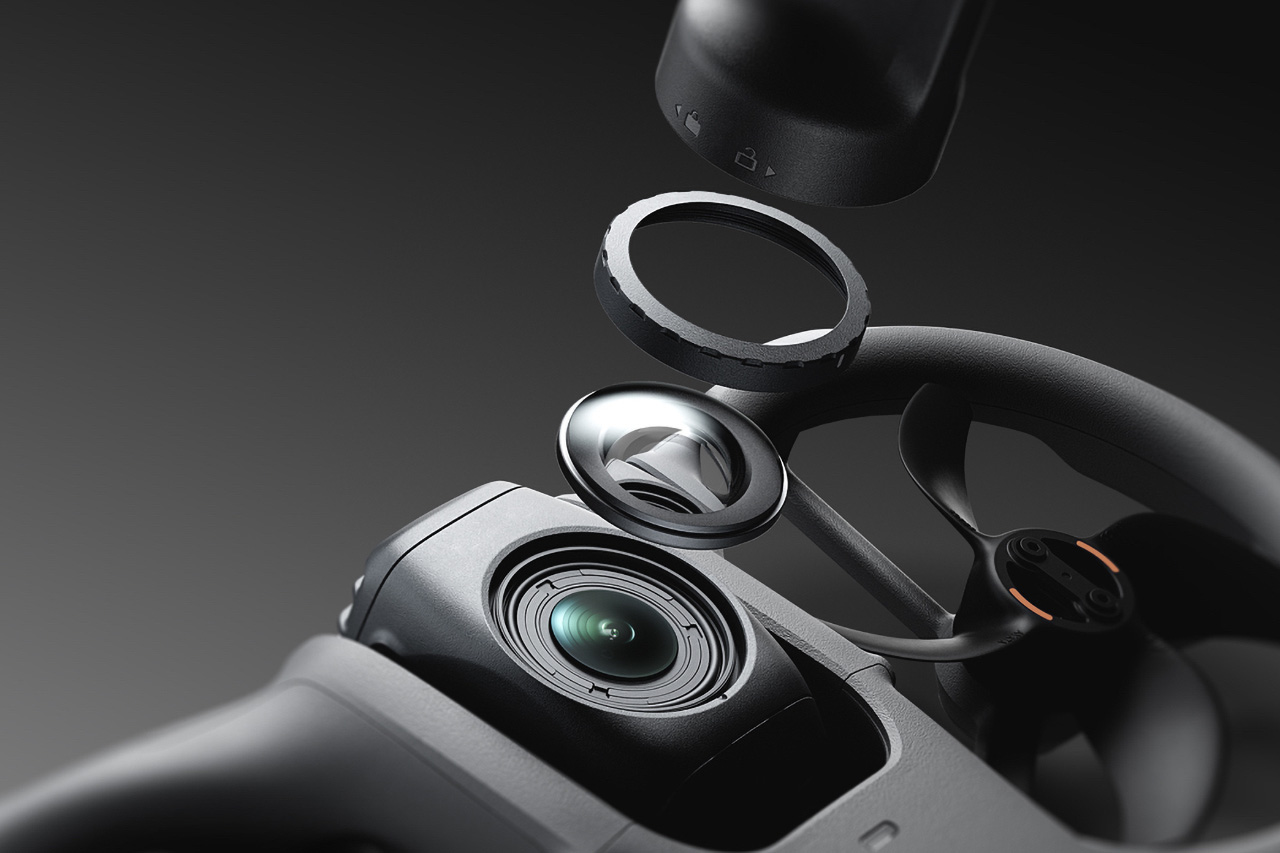
Integrated 360‑degree imaging system
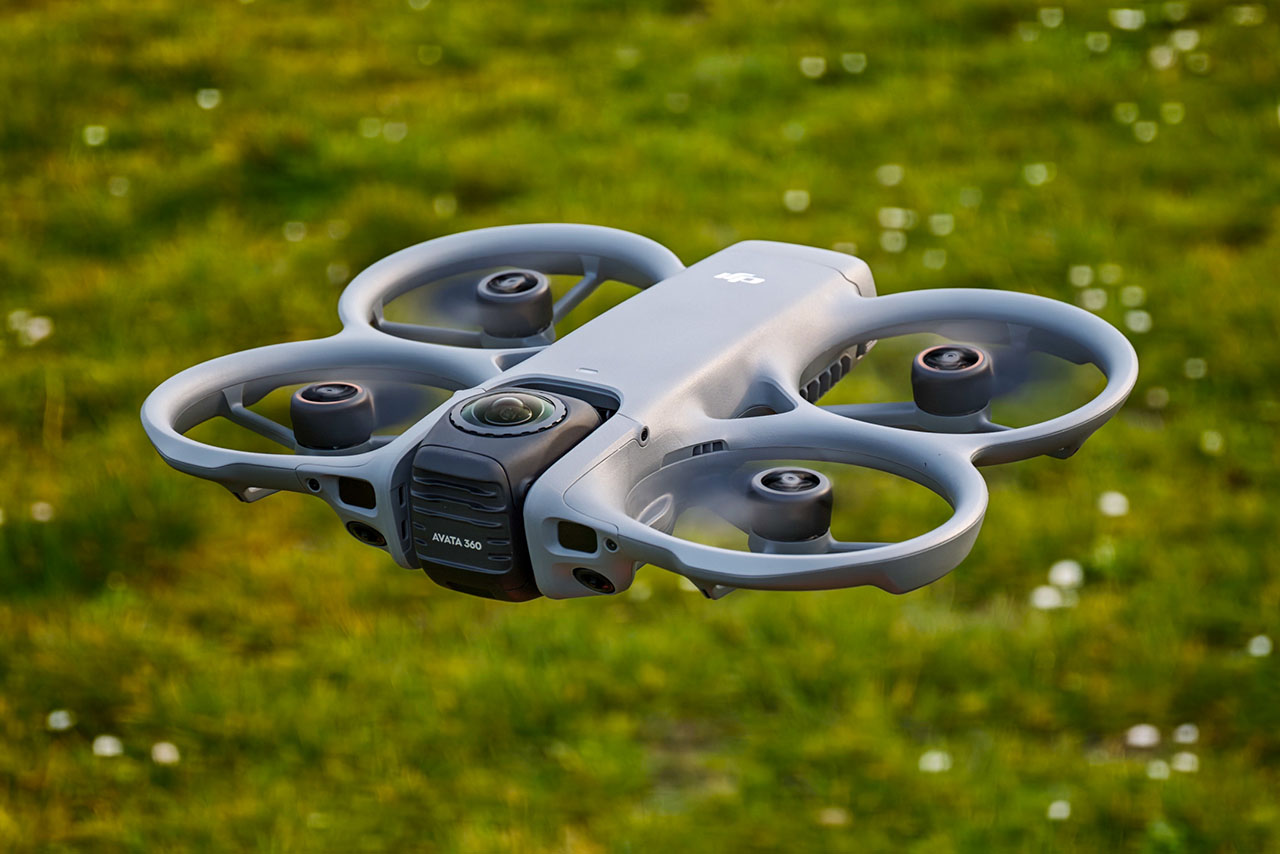
At the core of the Avata 360 is a dual‑camera system built around two 1/1.1‑inch square CMOS sensors, each offering 64MP effective resolution. The paired lenses provide a 200° field of view per side, enabling full spherical capture with internal stitching that removes the aircraft from the final image under supported shooting conditions.
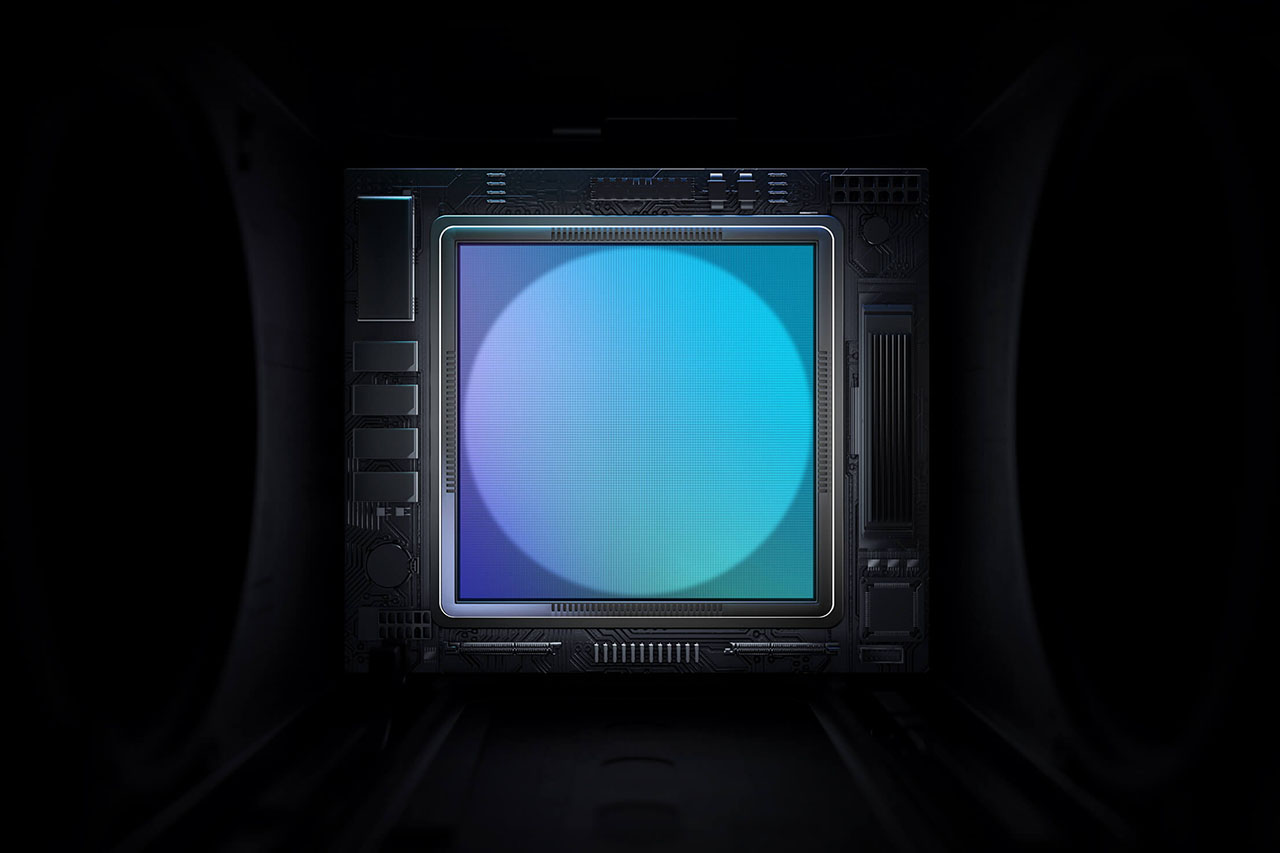
In panoramic mode, the camera supports:
- 8K (7680 × 3840) 360‑degree video at up to 60fps
- 6K 360‑degree video at up to 60fps
- 10‑bit recording with D‑Log M for extended dynamic range
Single‑lens mode is also available, offering 4K (4:3) recording at up to 60fps and slow‑motion options up to 2.7K at 120fps, depending on controller and goggle configuration.
Stabilization combines a single‑axis mechanical gimbal (pitch) with electronic processing via RockSteady 3.0 and HorizonBalancing, maintaining smooth footage during aggressive FPV maneuvers while preserving horizon alignment when required.
Flight performance and endurance
With a takeoff weight of approximately 455 grams, the Avata 360 is heavier than previous Avata models but remains compact for an FPV platform with integrated 360 imaging. DJI lists a maximum flight time of around 23 minutes, measured under controlled test conditions.
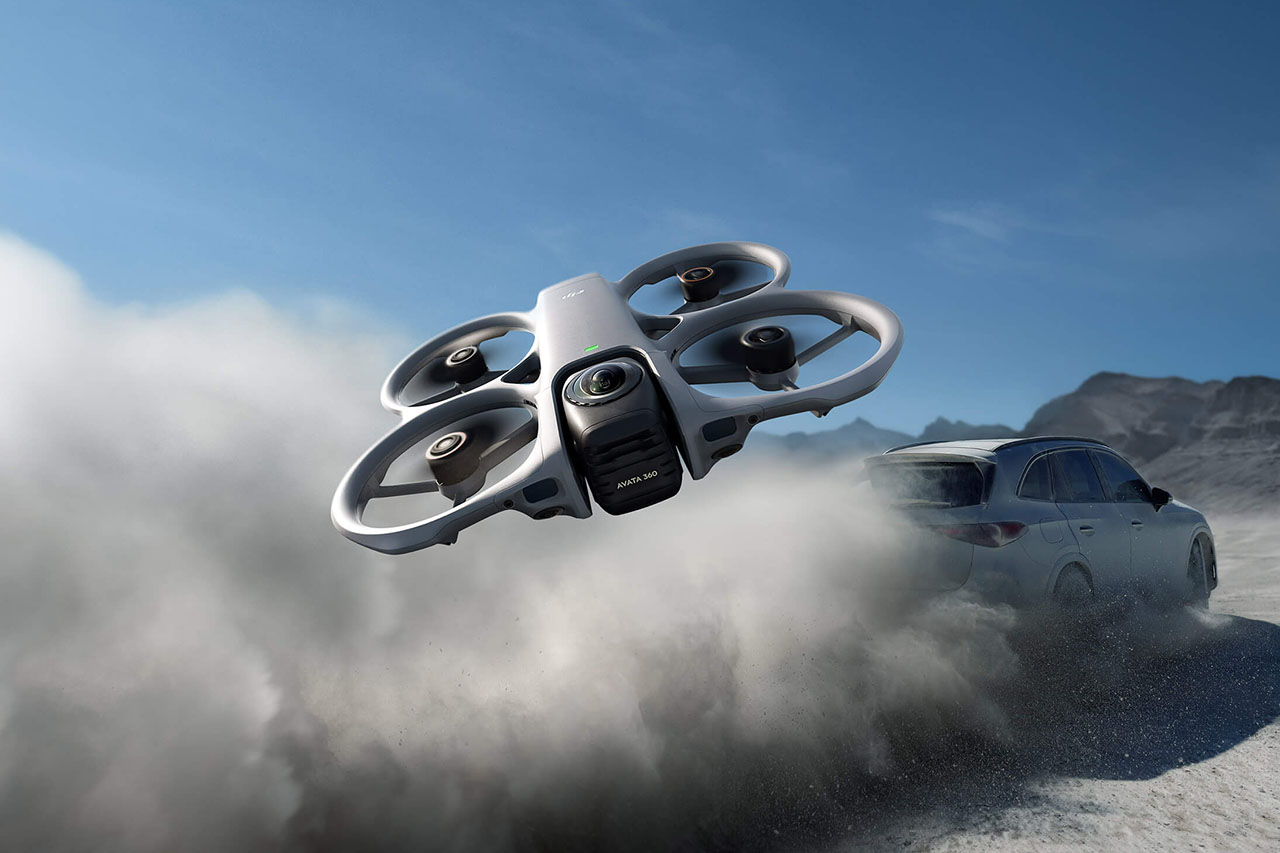
Key flight performance figures include:
- Maximum horizontal speed: 18 m/s (Sport mode)
- Maximum ascent / descent speed: 10 m/s
- Maximum takeoff altitude: 4,500 meters
- Wind resistance: Level 5 (up to 10.7 m/s)
Transmission is handled by DJI’s O4+ system, with a maximum rated range of up to 20 km (FCC) and low‑latency FPV viewing when paired with compatible goggles and controllers.
Safety and sensing system
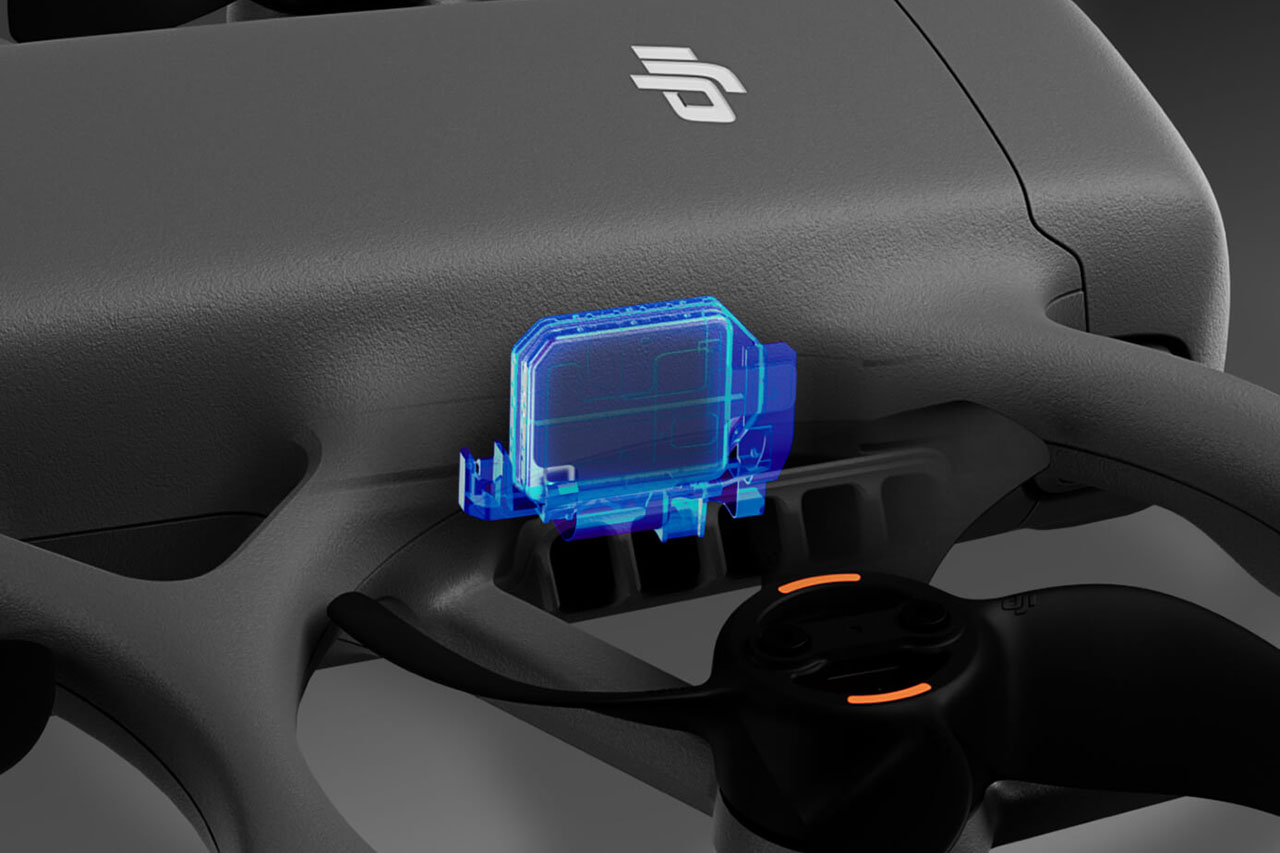
Unlike earlier Avata models, the Avata 360 incorporates a more advanced sensing suite. DJI lists a full omnidirectional visual system, supplemented by downward infrared sensors and a forward‑facing LiDAR module, enabling obstacle detection and braking in complex environments.
The aircraft is classified as EU C1, aligning it with current European regulatory frameworks for drones in this weight class.
Control, storage, and workflow
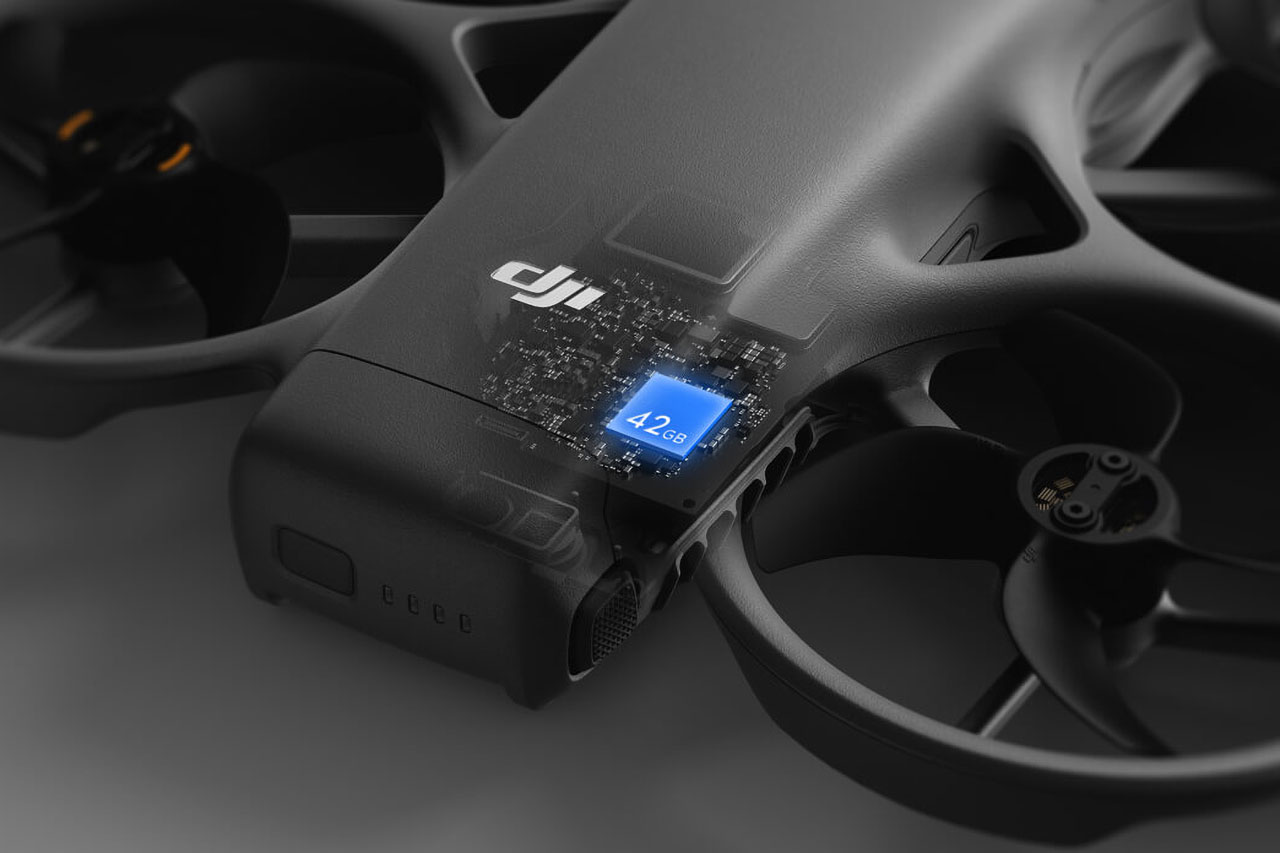
The Avata 360 supports DJI’s latest FPV goggles and motion controllers, delivering immersive real‑time viewing with transmission latency as low as approximately 130 ms under optimal conditions. Internal storage is rated at 42GB, with additional recording supported via microSD cards.
Captured footage can be processed using DJI’s desktop and mobile editing tools, with full support for reframing, stabilization, and horizon correction in post‑production.
Key Specifications
| Feature | Details |
|---|---|
| Takeoff weight | Approx. 455 g |
| Dimensions | 246 × 199 × 55.5 mm |
| Max flight time | Approx. 23 minutes |
| Max speed | 18 m/s (Sport mode) |
| Wind resistance | 10.7 m/s (Level 5) |
| Camera sensors | Dual 1/1.1‑inch CMOS, 64MP effective per sensor |
| Lens | 200° FOV, f/1.9, 7.8mm equivalent |
| Video resolution | 8K 360@60fps, 6K 360@60fps, 4K (4:3)@60fps |
| Stabilization | Single‑axis mechanical gimbal + RockSteady 3.0 + HorizonBalancing |
| Transmission | O4+, up to 20 km (FCC) |
| Internal storage | 42GB |
| Operating temperature | −10°C to 40°C |
| Classification | EU C1 |
Market positioning
The Avata 360 occupies a distinct position within DJI’s ecosystem. It does not replace traditional FPV drones focused on speed and manual control, nor does it function as a handheld 360 camera. Instead, it bridges both categories, offering FPV flight dynamics combined with capture‑everything‑first, frame‑later workflows.
With multiple configurations available, the Avata 360 is positioned as a premium creative tool rather than an entry‑level FPV drone. Pricing starts at approximately $499 USD for the Base Aircraft Only version. The Fly More Combo with RC 2 controller is priced at around $1,015 USD, while the Motion Fly More Combo, which includes the RC Motion 3 controller and N3 goggles, also comes in at approximately $1,015 USD. The Advanced Combo, bundling both the N3 goggles and RC 2 controller, is priced at roughly $1,250 USD.
This tiered pricing structure reflects DJI’s focus on immersive content creation, offering different entry points depending on control preferences and workflow requirements.