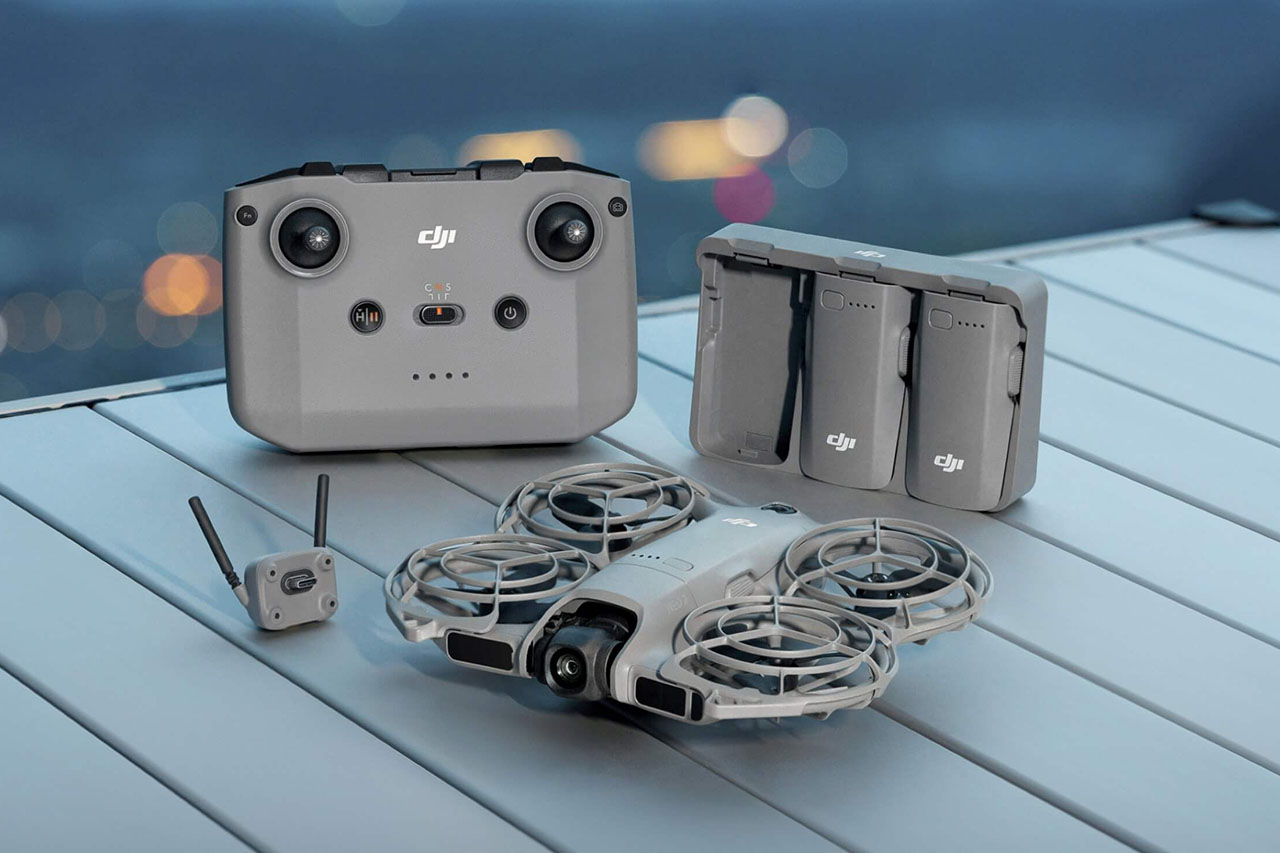
DJI has officially introduced the Neo 2, a palm-sized follow-me drone that’s set to redefine entry-level aerial videography with smarter avoidance and gesture controls for on-the-go creators.
Unveiled on October 30, 2025, this successor to the original Neo amps up autonomy in a market crowded by compact rivals like the HoverAir X1 and Skydio 2+, where DJI’s ecosystem dominance shines through seamless app integration and rock-solid transmission.
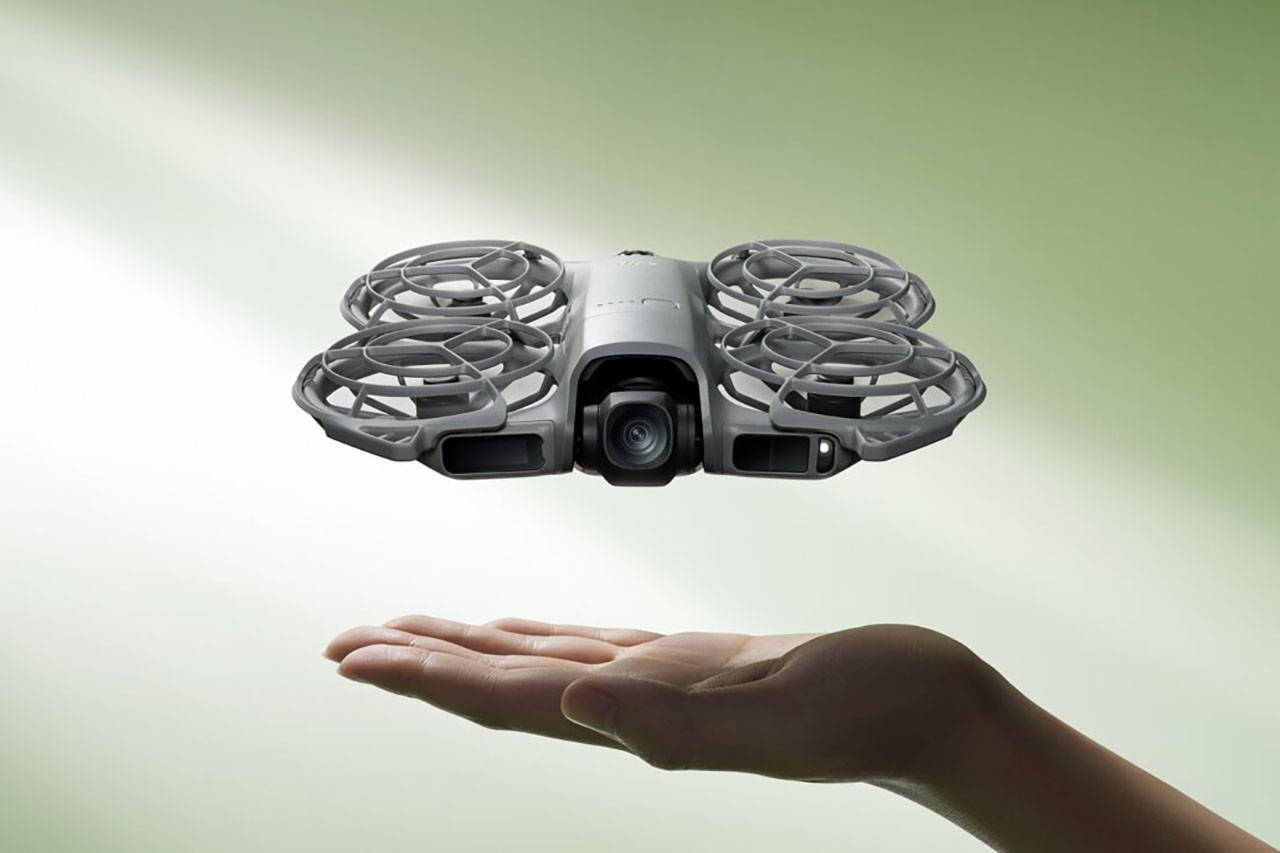
At 151 grams, it’s a no-fuss pick for vloggers, hikers, and social media pros who want cinematic tracking without the hassle of bulky controllers—potentially undercutting pricier autonomous flyers while leveraging DJI’s fly-safe tech to appeal to beginners wary of regulations.
Imaging and Stabilization
The Neo 2’s star is its 1/2-inch CMOS sensor with f/2.2 aperture and 119.8° FOV, capturing sharp 4K video at 60fps (16:9) or 100fps in manual mode, plus 1080p slow-mo up to 240fps.
That means fluid, stabilized clips with QuickShots modes like Follow, Orbit, and Helix, all triggered by hand gestures—no remote required for basic flights.
The 49GB internal storage swallows hours of 4K without a microSD card, and RockSteady stabilization keeps horizons level during windy pursuits, making it a pocketable second brain for solo adventurers.
Obstacle Avoidance and Flight Performance
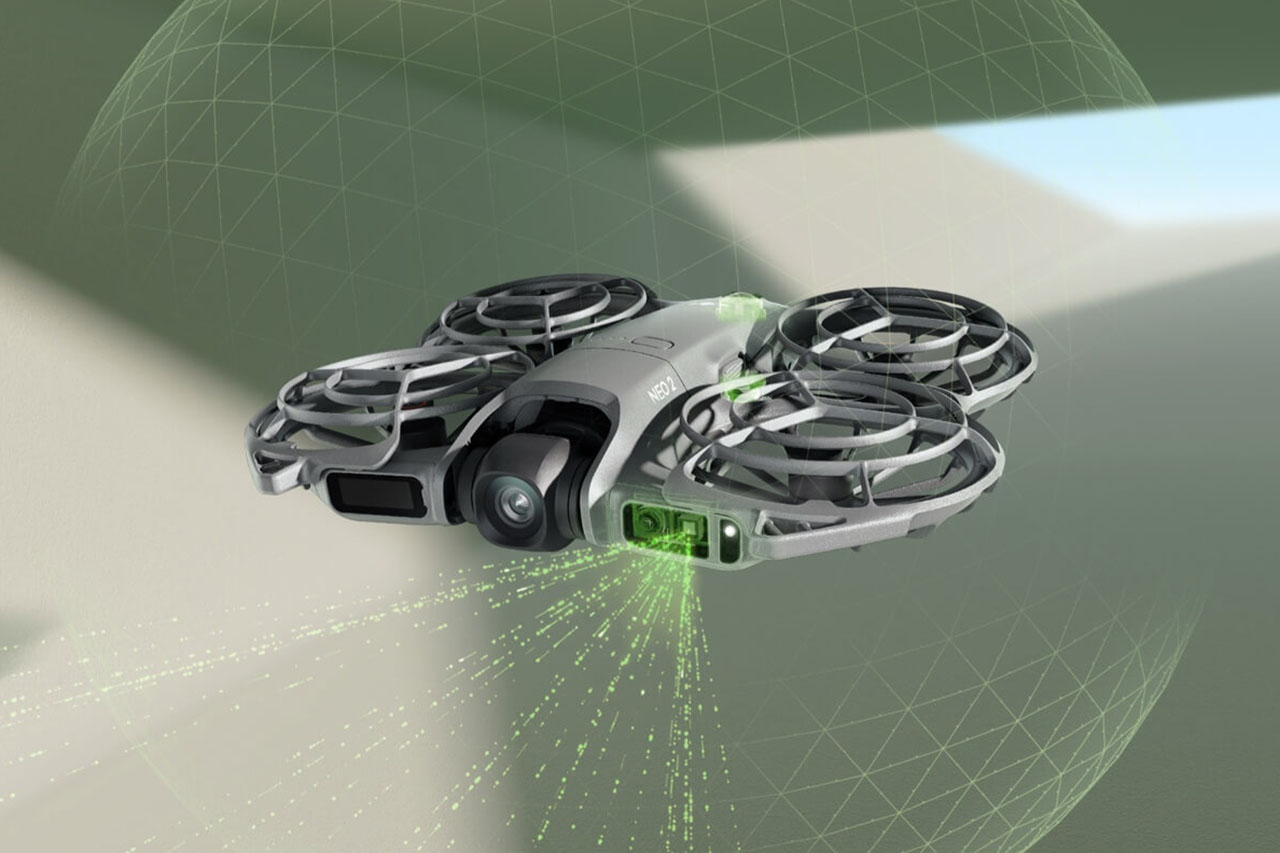
Omnidirectional obstacle sensing via LiDAR + vision systems adds a layer of smarts, dodging branches or crowds in real-time for safer autonomous flights up to 50 meters high and 12 m/s speeds.
Flight time stretches to 19 minutes on the 1,606mAh battery, with quick-swap design for back-to-back sessions.
The optional DJI Neo 2 Digital Transceiver unlocks 10 km O4 transmission and FPV goggles.
Build-wise, it’s tough yet featherlight at 151g, folding into a credit-card profile with propeller guards that pop on for indoor fun—though purists might miss the raw power of DJI’s Avata series.
Market Position and Use Case
DJI’s move here cements the Neo line as a gateway to drones, blending AI smarts with affordability to hook the TikTok crowd while nodding to pros needing a discreet sidekick.
Early tests highlight the LiDAR’s edge over ultrasonic sensors in cluttered environments, but battery life still lags behind tethered alternatives.
In an era of FAA scrutiny for sub-250g flyers, the Neo 2’s C0 classification could make it a stocking stuffer hit this holiday season.
Key Specifications
| Feature | Details |
|---|---|
| Weight | 151g (without transceiver), 160g (with transceiver) |
| Dimensions | 147 × 171 × 41 mm (folded, no transceiver), 167 × 171 × 54 mm (with transceiver) |
| Camera Sensor | 1/2-inch CMOS, f/2.2, 119.8° FOV, 16.5mm equivalent |
| Video Resolution | 4K/60fps (16:9), 4K/100fps (manual), 1080p/240fps |
| Photo Resolution | 12MP (4000×3000 4:3, 4000×2250 16:9) |
| Flight Time | 19 min (no guards), 17 min (with guards) |
| Max Speed | 12 m/s (sport/follow mode) |
| Obstacle Sensing | Omnidirectional LiDAR + vision, 0.5–15 m range |
| Transmission Range | 50 m (controller-free), 10 km (O4 transceiver) |
| Storage | 49GB internal (no microSD) |
| Stabilization | RockSteady, dual-axis gimbal (pitch/roll) |
| Max Altitude | 2,000 m |
| Wind Resistance | 10.7 m/s (Level 5) |
| Operating Temperature | -10° to 40°C |
Pricing & Availability
The DJI Neo 2 starts at $349 for the base model, with combo kits including extra batteries and the Digital Transceiver reaching $499.
It’s available for pre-order now via the DJI Store and select retailers, with worldwide shipping beginning November 15, 2025.