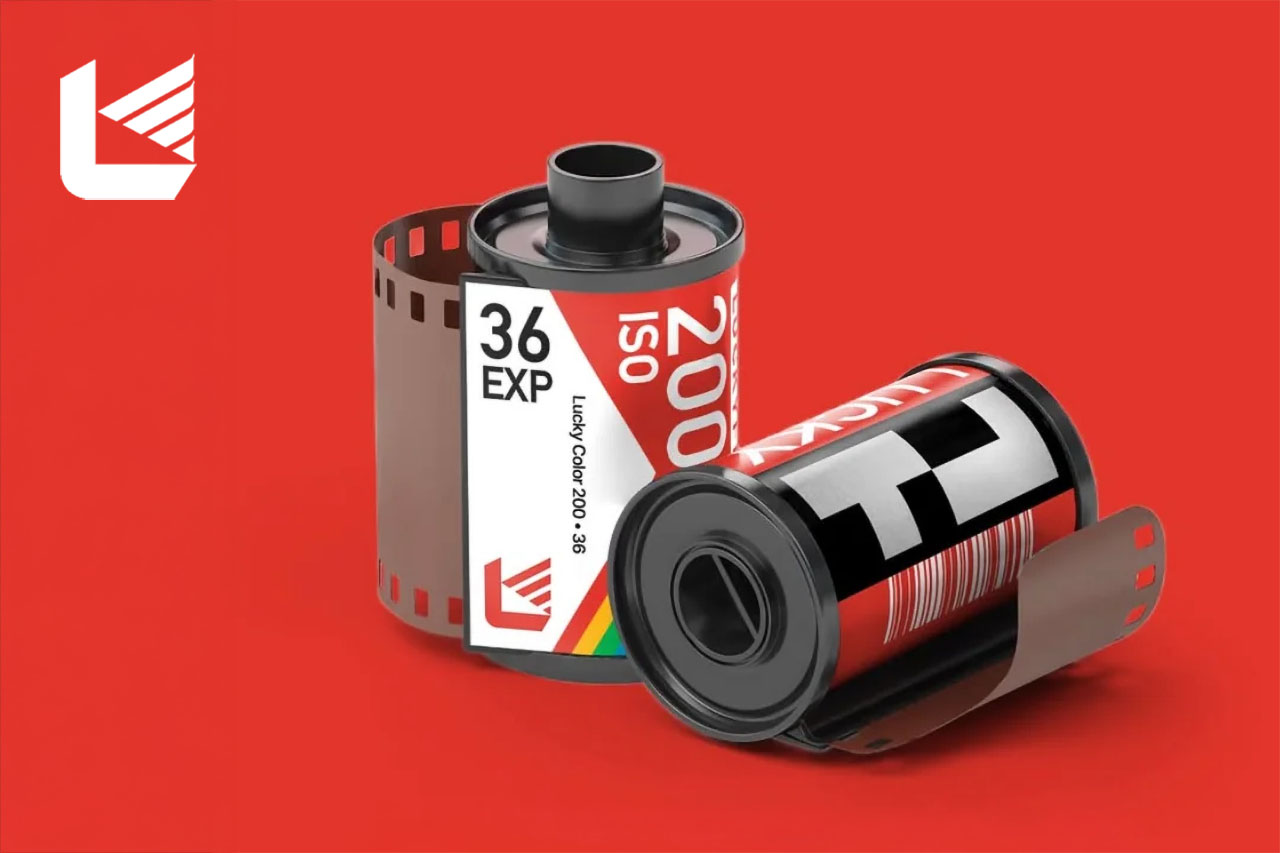
China Lucky Film Group is about to ship its second modern color negative emulsion. Lucky Color 400 is a new ISO 400 film that improves on the company’s Lucky Color 200 in almost every way that matters, and it arrives in both 35mm and 120 medium format. That last part is quietly significant, it fills a hole in the market left by the absence of a medium format Kodak UltraMax 400.
The film is expected to launch within the next one to two months, placing the release sometime around mid-to-late July 2026. Pricing has not been finalized, but Lucky has indicated it will be “slightly higher” than Lucky Color 200, which already sits at the budget end of the color film market.
What the early samples show
Alexander Doran at 35mmc got his hands on a pre-production roll through Reflx Lab, one of Lucky Film’s official distributors, and published a detailed first look on May 31. The short version: this is not just a faster version of C200. It is a meaningfully better film.
The headline improvement is color accuracy, particularly with secondary and mixed hues. Lucky C200, which launched in 2025 as the company’s first new color film in years, had a notable weakness with mixed colors. Reds, greens, and blues looked fine individually, but scenes with complex color interactions fell apart. C400 closes that gap significantly. Doran describes the overall color rendition as “improved across the board.”
Grain has increased, as you would expect doubling the ISO from 200 to 400. Resolution has dropped slightly too. But neither is out of line for a consumer-grade ISO 400 color film. Doran even found the grain manageable on overcast days, which is not something every budget 400-speed film handles gracefully.
Where it fits in the 2020s film revival
The modern color film landscape has been shaped by a handful of new emulsions arriving in quick succession: Harman Phoenix, Wolfen NC200/NC400/NC500, and Lucky’s own Color 200. Each has a distinct look and each has trade-offs. Phoenix has punchy, high-contrast colors but limited latitude. The Wolfen films lean desaturated and grainy. Lucky C400, based on the early samples, lands somewhere more balanced: strong colors like Phoenix but with better accuracy, and ISO 400 speed like the Wolfen stocks but with more saturation and finer grain.
The comparison Doran himself draws is telling: “This film seems to have it all.” That is a strong endorsement from someone who has shot and reviewed most of the new emulsions on the market.
The catches
No film is perfect, and C400 has three weaknesses worth noting. First, it carries a warm tint that generally white balances out fine, but underexpose it and the images become significantly harder to grade. Push processing might be off the table. Second, mixed lighting situations, think a shaded subject against a sunlit background, produce results that need heavy correction work. Third, underexposure latitude has decreased compared to C200, even as overexposure latitude improved. That means you need to be more careful about nailing your exposure, especially in low light. The film punishes an underexposed frame more than its slower sibling does.
Why 120 format changes the conversation
When Kodak discontinued UltraMax 400 in 120 format, it left a gap for an affordable, medium-speed color negative film in medium format. You could shoot Portra 400 in 120, sure, but at a premium price. Lucky C400 arriving in 120 at launch, at a price expected to land near the budget end of the spectrum, gives medium format film shooters something they have not had in years: a cheap ISO 400 color option.
For someone shooting a Mamiya 645 or a Pentax 6x7 who wants the flexibility of 400-speed film without paying Portra prices, this could be the film that makes medium format color viable for everyday shooting again.
The analog photography market has been hungry for new color emulsions. Lucky C200 was a promising start with some rough edges. C400 looks like the follow-up that smooths out most of those edges while adding a stop of speed and 120 format support. If the pricing holds where expected, this could become the film you throw in your bag when you do not want to think too hard about the cost of every frame.