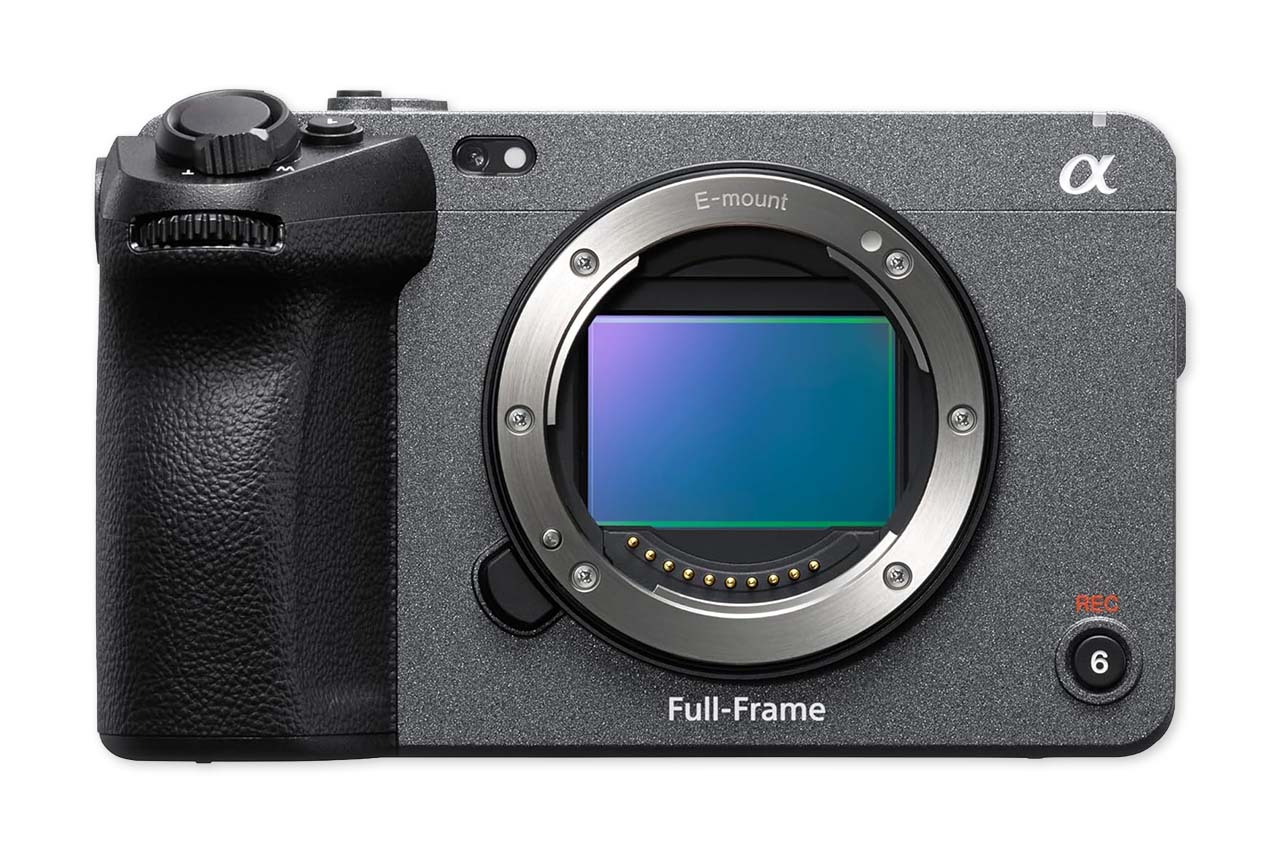
A global shutter in a compact cinema body. If the latest rumor holds, that is exactly what Sony has planned for the FX3II, and it would be a first for any camera in this category.
The report comes from SonyAlphaRumors, where site owner Andrea Pizzini says he is “near certain” the FX3II will arrive before the end of summer 2026. The specific claim, attributed to an anonymous source who says they spoke with a Sony manager, is that the camera will feature both a new dual processor and a global shutter sensor.
Why global shutter matters in video
Global shutter reads every pixel on the sensor at the same instant. There is no rolling shutter, no skew, no jello effect when panning or filming fast-moving subjects. For the FX3, which Sony markets as a run-and-gun cinema camera for solo operators, that changes everything.
Think about what the current FX3 cannot do well: whip pans, fast handheld movement through tight spaces, shooting out of a moving vehicle. All of those create visible skew with even the fastest rolling shutter sensors. A global shutter eliminates the problem entirely.
The trade-off has always been dynamic range, but Sony’s global shutter in the A9 III proved the technology has matured. That sensor delivers roughly 14 stops of dynamic range and clean footage up to ISO 6400. A cinema-tuned version of that architecture in the FX3II would be a genuinely new tool, not just an incremental refresh.
Dual processor: what it enables
The dual processor claim is equally interesting. Sony’s current cinema lineup, including the FX6 and FX3, uses a single BIONZ XR processor. Adding a second processor would increase throughput for higher frame rates, more sophisticated autofocus, and potentially internal RAW recording at resolutions the current FX3 cannot sustain.
The FX3 currently tops out at 4K 120p with a crop. A dual-processor FX3II could realistically push 4K 120p without cropping, or open the door to 6K and 8K recording modes that put it closer to the FX6 and FX9 territory.
Where the FX3II fits
The original FX3 launched in February 2021. Five years is a long gap for a cinema camera in a market where Blackmagic, Canon, and RED refresh their lineup every two to three years. The FX3 carved out a loyal following among documentary shooters, wedding filmmakers, and YouTubers who wanted cinema ergonomics in a mirrorless-sized body.
An FX3II with global shutter and a second processor would leapfrog everything in its class. The Canon C70 and C80 use rolling shutter. The Blackmagic Pyxis uses rolling shutter. Even the RED Komodo, which uses a global shutter, is a different form factor entirely, larger, heavier, and more rig-dependent. Sony could be the first to put global shutter in a body you can actually hold with one hand.
What we do not know yet
Price, recording formats, resolution, dynamic range, autofocus improvements, and the actual announcement date are all unknown. The source is a single anonymous tip, and even Pizzini notes that he still has “no reliable specs to share” beyond what this one source provided.
That said, the timeline makes sense. Summer 2026 would give Sony a major cinema announcement ahead of IBC in September. If the global shutter claim is accurate, this is the most technically ambitious small-body cinema camera Sony has ever attempted.