GoPro is in serious trouble. Not “rough quarter” trouble. Not “we need to restructure” trouble. The kind of trouble where a company has to tell the SEC, in writing, that it might not survive.
That is exactly what happened on June 1, 2026. In an amended 8-K filing with the Securities and Exchange Commission, GoPro disclosed that “there is substantial doubt about the Company’s ability to continue as a going concern.” The company and its auditor cited ongoing operating losses, negative cash flow, and a very real risk that it will not be able to meet its financial covenants.
This is not a headline you ever want to read about the company that invented the modern action camera.
The numbers behind the warning
The filing did not come out of nowhere. GoPro’s financial position has been deteriorating for years, and the speed of the decline has accelerated sharply in 2026.
Revenue dropped 26% in the first quarter of this fiscal year. In April, GoPro announced plans to lay off roughly 23% of its workforce. And on Monday, June 1, the stock fell as much as 12% on the news before recovering slightly. As of this writing, GoPro trades at $1.18 per share.
For context: when GoPro went public in June 2014, it opened at $24 and closed the day at $31.34, giving the company a market valuation of nearly $4 billion. Today, that number is around $200 million. The stock is down 89% over the past five years. Its all-time high was near $80.
GoPro has pointed to the global surge in memory prices, driven by the AI boom, as a primary factor squeezing its margins. And that is a real problem. Every camera company is feeling the impact of more expensive components. But the memory shortage alone does not explain an 89% stock collapse. Something deeper has been unraveling for a long time.
How the action camera market left GoPro behind
For years, GoPro owned the action camera category the way Kleenex owns facial tissue. The brand was synonymous with the product. But that dominance has eroded, and the challengers are not coming from the US or Japan.
Chinese companies DJI and Insta360 have been methodically eating GoPro’s lunch. DJI’s Osmo Action series has matched or beaten GoPro on image quality at competitive prices for several generations now. Insta360 has carved out a strong position with creative-first features like 360-degree capture and AI-driven reframing that GoPro simply does not offer in the same way. Both companies are backed by deep R&D budgets and supply chains that give them a cost advantage GoPro cannot match.
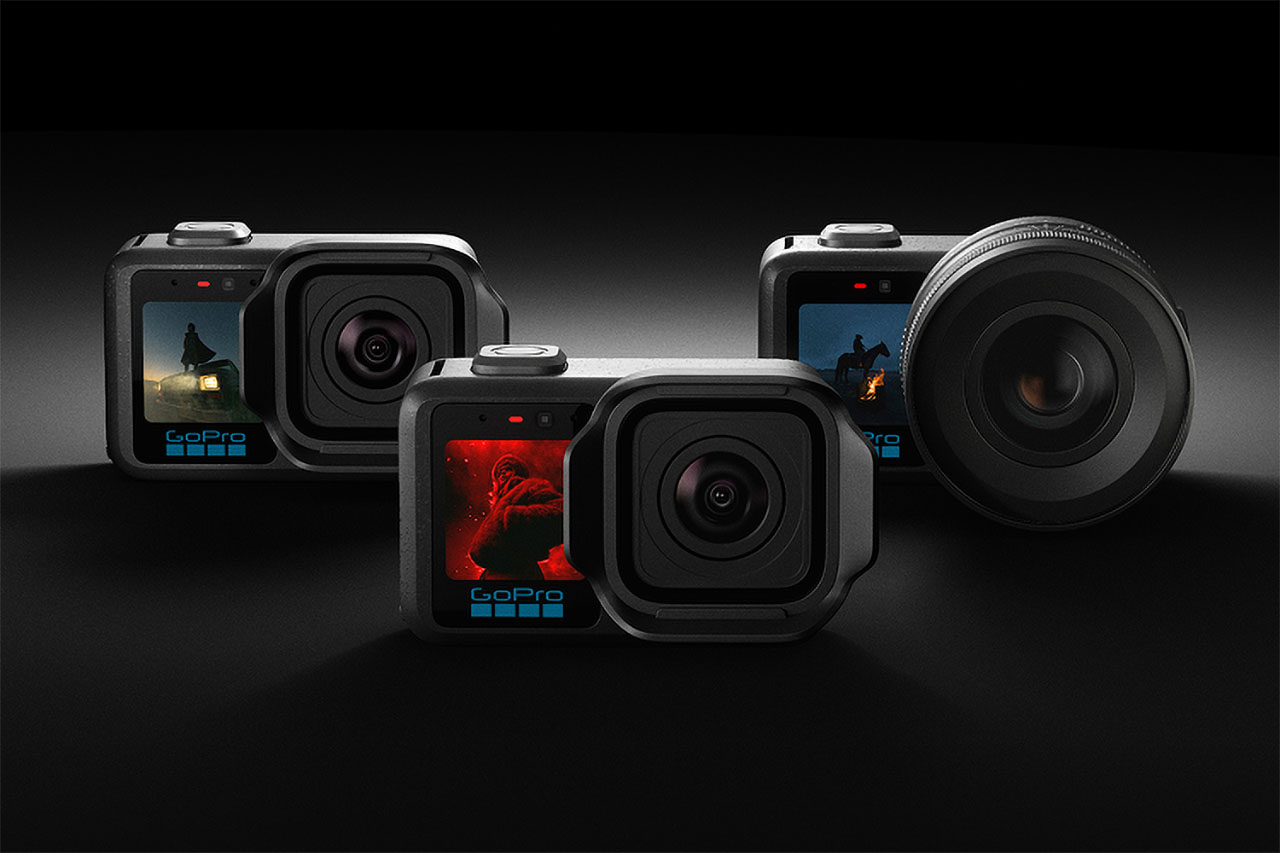
GoPro has not been standing still. The company recently launched the Mission 1 series, an ambitious pivot into compact cinema cameras built around an all-new GP3 processor. The early specs are genuinely interesting: the $600 base model captures 8K/30p video from a 50MP 1-inch sensor and claims five hours of battery life at 1080p30. The step-up Mission 1 Pro adds 8K/60p and 4K/240p for $700. On paper, the Mission 1 looks like the most forward-thinking product GoPro has released in a decade.
But here is the problem: the Mission 1 needs to sell, and it needs to sell now. GoPro has stated that the memory shortage has already reduced its forecasted sales. It does not expect to have enough liquidity to satisfy its loan covenants and debt obligations. A promising product that might ramp up over the next year is not helpful when the bills are due this quarter.
What happens next
GoPro is working with advisors to evaluate its options. Everything is on the table: a sale, a merger, or even an expansion into entirely new segments like defense and aerospace. The company that once dominated action sports is now looking at government contracts as a potential lifeline.
If GoPro cannot find a buyer or secure new financing, the risk of default is real. A forced sale at a distressed valuation would reshape the action camera market overnight. DJI and Insta360 would inherit most of the remaining market share. And GoPro’s extensive patent portfolio, one of its few remaining hard assets, could end up in the hands of a competitor or a patent holding company.
GoPro defined this category. For nearly two decades, its name has been attached to some of the most iconic POV footage ever captured. That legacy does not pay the bills, but it does mean that whatever happens next will matter far beyond a single company’s balance sheet.
The SEC filing is a warning, not an obituary. GoPro still has products to sell, a brand that millions recognize, and a new camera platform that could, given time, find an audience. But the clock is ticking louder than it ever has.